
Newsletter | Do You Want to Live in the Jetsons’ Home?
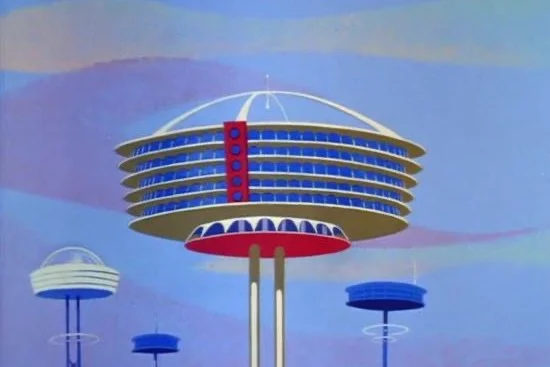
Both WIRED magazine and the Wall Street Journal recently offered glimpses into trends expected to shape the future of homes. They’re interesting because they raise questions about how we will live, interact with technology and relate to the world around us. They also sketch visions that link these homes to our health.
The high-level trends include, of course, lots of tech. Appliances will be talking to each other, like refrigerators that coordinate your Instacart deliveries and generate recipes with your soon-to-expire ingredients. Controls will be everywhere and nowhere, accessible by voice and on an assortment of screens. Giant LED screens will proliferate to many rooms. And of course robots, even the humanoid kind, will arrive to wash your dishes, fold your laundry and generally make physical work optional. (Robots raising toilet seats for men – and presumably lowering them afterwards – is another feature we can look forward to, per WSJ.)
There’s the home as a wellness sanctuary, with purified air and optimal levels of oxygen pumped in, saunas and cold plunge pools, and meditation rooms and other spaces designed for calm and tranquility. Exercise spaces take a prominent role (no more sliding the yoga mat under the couch when you’re done). There are interesting environmental features – lighting designed to mimic daylight throughout the day in order to align circadian rhythms and mattresses that optimize their temperature for better sleep.
There’s also the home as wellness manager, with those same smart beds monitoring your vitals and your bathroom giving you feedback on your hydration levels and analyzing your stools for any signs of trouble.
This idea, of a set of technologies, both visible and invisible, but omnipresent in the sense that they are generating data, analysis and feedback about one’s health evokes an interesting recent take on technology that we saw in L.M. Sacasas’s newsletter, The Convivial Society. Sacacas takes issue with the cliche that technology is some sort of neutral tool and that its impact really depends on what people do with it. Writing about AI as an example, he argues, “But AI is not a tool in this sense, it is an environment which envelops the user and works on us from the inside out while we naively think that we remain unchanged by our use so long as we are using it carefully and intentionally.” [Emphasis added] If we are surrounded by technology that monitors – and coaches us on – our health, what does that do to our relationship to our health? How does that change what we think of it? How we prioritize it? And what we do?
Derek Thompson begins to address these questions with his recent newsletter Why the Healthiest Generation Is the Loneliest with a focus on his own experience using an Oura ring. For Thompson, the ever present cycle of data, analysis, feedback and behavior change has brought him important health benefits, but perhaps at a cost:
“At its best, the ring makes me fitter, happier, and, sure, even more productive. [Props to Thompson for referencing Radiohead’s dystopic track from OK, Computer.] I walk more, lift more, sleep more, and drink less. You will be hard-pressed to find a physician who thinks there’s anything amiss in the previous sentence.
“But the same doctor might not see how the obsession with winning the measurable games of health can encroach on the less measurable games of life. The best way to sleep more is to see fewer friends in the evening. The best way to lift more during the week is to eliminate social lunches to protect my midday gym time. To become a measurably enhanced self often means eliminating my less quantifiable sources of meaning and happiness.”
Thompson poses the idea of managing one’s health as turning into a second job for many people – it becomes quite literally an occupation, taking up both attention and actual leisure time:
“Over time, this trains people to approach their downtime with the very same productivity mindset that they were supposed to leave at the office.”
And then he throws in a twist, suggesting that the pursuit of one’s own health is a largely solitary pursuit. It is, after all, focused on ourselves and our self improvement. Linking back to his own experience, he wonders how the wellness and longevity trends might be inadvertently undermining social connection and exacerbating the loneliness epidemic.
The future home visions also paint an interesting and nuanced picture of preferences for social connection. They suggest a desire for social interaction, but with boundaries. Controlled social interaction, perhaps. Spaces for entertaining are still a thing and even a yearning for hosting overnight guests, but in guest houses not guest rooms. There is the image of a primary suite becoming a self-contained space, almost independent from the rest of the home. AI will guard the premises and understand whether the person at your door is a friend, neighbor, delivery person – or a threat. One designer envisioned spaces within homes with spaces that could give you a sense that you’d left the home, without actually having to leave.
Winston Churchill famously said “we shape our buildings and afterwards they shape us.” How homes are designed, how they relate to our communities, and the environments they create matter. If anything, these visions of homes of the future suggest a greater, more conscious emphasis on health while possibly doubling down on two of the long-term megatrends – convenience and privacy – that have likely eroded our health. To be fair, not everyone is down with these visions. Do read In Praise of a Dumb House, a piece in WIRED’s issue from satirist Jill Kargman, which runs through a number of these visions and her world-weary reactions to them. She puts it nicely: “I want my house to look like a nice cozy place to play mah-jongg, not produce a podcast.”
Read the full newsletter.